How Food and Design Interact (More Than You Think)
Food and design are not separate conversations.
They live in the same room.
At Nikki Levy Interiors, we don’t design kitchens as appliances and cabinetry. We design them as stages. For dinner parties. For homework at the island. For late-night tea. For holiday chaos. For Sunday morning pancakes.
Food shapes how a space is used — and design shapes how food is experienced.
Here’s how they constantly influence each other.
The Kitchen Is the New Living Room
For years, formal dining rooms sat untouched while everyone crowded into the kitchen.
Now? The kitchen is the living room.
Large islands become gathering tables. Upholstered counter stools matter. Lighting isn’t just functional — it sets mood. When we design a kitchen, we think about sightlines, seating depth, and how people lean, perch, spill, linger.
If food brings people together, design determines whether they stay.
Scale Changes the Energy of a Meal
A massive 12-foot island says: gather here.
A smaller, round breakfast table says: slow down.
Long rectangular dining tables feel celebratory. Round ones feel intimate. Banquettes pull conversations closer. Oversized pendants hung slightly lower create warmth.
The scale of a space changes the tone of the meal before a single plate hits the table.
Material Matters (More Than You Realize)
Marble feels cool and elegant.
White oak feels grounded and warm.
Polished brass catches candlelight.
Matte finishes absorb it.
Food is sensory — taste, smell, texture. Design should support that sensory experience, not compete with it.
We think about how a stone reflects under evening light. How a dark countertop makes white dishes pop. How textured plaster behind open shelving adds depth without overwhelming the eye.
The backdrop affects the entire experience.
Storage Shapes Lifestyle
Pantry design isn’t glamorous — but it changes everything.
A well-organized pantry encourages cooking. A beautiful bar area encourages hosting. A hidden appliance garage keeps counters calm.
Design quietly nudges behavior.
When everything has a place, the kitchen becomes usable, not just beautiful.
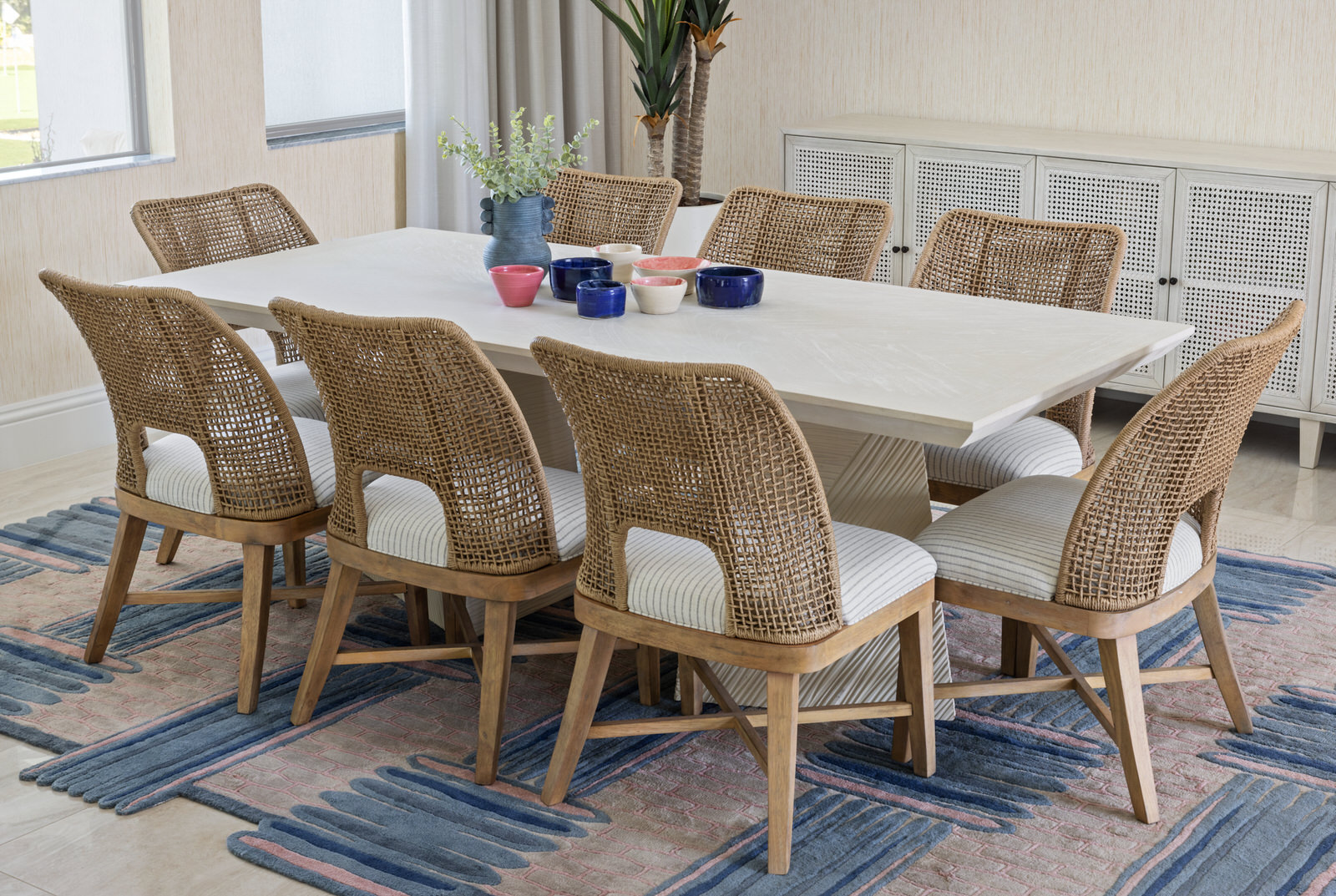
Dining Rooms Deserve a Comeback
There is something powerful about sitting at a proper table.
Layered lighting. Comfortable chairs. A rug that grounds the room. Art that sparks conversation.
Food tastes different when the space feels considered.
We design dining rooms to feel like experiences — not relics.
Outdoor Dining Is Design, Too
In warm climates, outdoor living is not an afterthought.
An umbrella for shade. Proper outdoor dinnerware. Comfortable lounge seating near the table. Lanterns for night.
Food doesn’t stop at the sliding door. Design shouldn’t either.
Design Creates Ritual
The coffee station you pass every morning.
The bar cart you roll out for guests.
The drawer that perfectly holds linens.
These small design decisions create rhythm.
And rhythm creates ritual.
The Real Intersection
Food brings people together.
Design determines how they feel while they’re together.
Are they relaxed?
Are they lingering?
Are they hosting more?
Are they proud of their space?
A kitchen isn’t just cabinetry. A dining room isn’t just a table.
When food and design work together, the home becomes more than beautiful.
It becomes alive.
Explore Awards